The Silent Crisis: Why Reducing Food Waste is the Fastest Path to Decarbonization
Food waste is frequently categorized as a mere operational inefficiency—a “cost of doing business.” However, viewing it through an environmental lens reveals a far more critical reality: food waste is one of the most significant drivers of global greenhouse gas emissions.
With nearly one-fifth of all globally produced food failing to reach a consumer, we are not just losing calories; we are losing the entire carbon investment required to produce, process, and transport those goods. For modern supply chains, reducing food waste is no longer just about profit margins—it is a mandatory pillar of corporate sustainability and global decarbonization strategies.
The “Invisible” Carbon Cost
Every kilogram of produce discarded represents a failure in resource management. When a crate of fruit is wasted, the following environmental investments are rendered null and void:
- Input Energy: The water, fertilizers, and pesticides used during cultivation.
- Logistics Energy: The refrigeration and fuel consumed during cold chain transit.
- Packaging Waste: The synthetic materials used to protect the product are often discarded alongside the spoiled food.
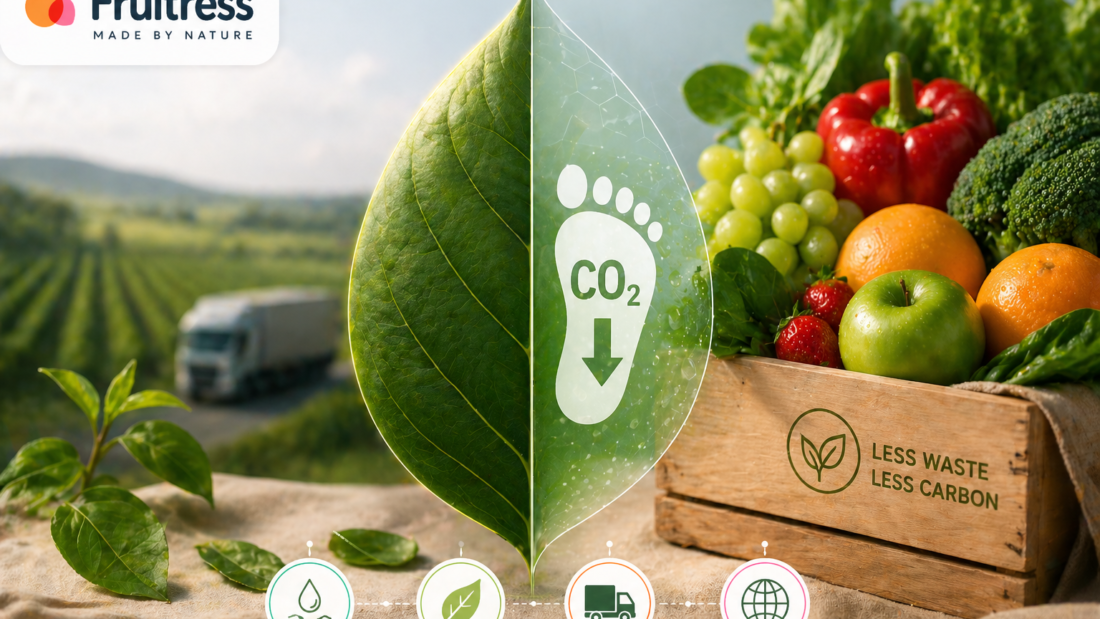
Furthermore, when this waste ends up in landfills, it undergoes anaerobic decomposition, releasing methane—a greenhouse gas with a warming potential over 25 times higher than CO₂ over a 100-year period. Consequently, food waste is responsible for approximately 8–10% of total global greenhouse gas emissions. Addressing this is not just an opportunity; it is an obligation for sustainable supply chain leaders.
Why Fresh Produce is the Critical Link
Fresh fruits and vegetables are the most vulnerable segment of our food system. Characterized by high respiration rates and sensitivity to post-harvest stressors, they face a “ticking clock” from the moment they are picked. Primary challenges include:
- Rapid Dehydration: Transpiration leads to weight loss and shriveling, rendering produce unmarketable.
- Ethylene Sensitivity: Accelerated ripening cycles lead to rapid spoilage in transit.
- Microbial Exposure: Even minor physical damage during handling creates entry points for decay.
Traditional logistics attempts to solve these through brute-force refrigeration. While necessary, it is energy-intensive. To truly lower the carbon footprint, we must move beyond refrigeration and stabilize the produce itself.
Innovative Preservation: A Dual-Impact Strategy
The solution lies in shifting our focus to the “last mile” of preservation—protecting the produce at the molecular level. Plant-based edible coatings like those developed by Fruitress are revolutionizing this sector by acting as a natural barrier.
How Edible Coatings Drive Sustainability
- Respiration Control: By moderating oxygen and carbon dioxide exchange, these coatings significantly slow the metabolic rate of the fruit.
- Moisture Retention: Acting as a protective seal, they prevent water loss, maintaining quality and weight from farm to fork.
- Plastic-Free Packaging: High-performance coatings provide the protection of synthetic wraps without the environmental burden of single-use plastics.
ESG Goals and the Future of Logistics
For stakeholders in the agricultural export market, sustainability is increasingly tied to market access and financing. Investors and retailers are demanding verifiable data on carbon reduction. By integrating advanced preservation technologies, companies can achieve:
- Reduced Scope 3 Emissions: Directly lowering the carbon footprint associated with spoiled goods and frequent logistics disposal.
- Operational Efficiency: Fewer losses mean higher throughput and improved profitability.
- Brand Equity: Demonstrating a commitment to waste reduction aligns with consumer demand for ethical, low-waste products.
Conclusion
Reducing food waste is the single most effective tool we have to lower the global carbon footprint of the food system. By extending shelf life and preventing spoilage, we ensure that the resources invested in agriculture actually feed the population rather than filling landfills.
The era of “high-loss” supply chains is coming to an end. For forward-thinking farmers, distributors, and retailers, adopting smart, plant-based preservation methods is the most strategic path toward a profitable and sustainable future.
Ready to optimize your supply chain?