
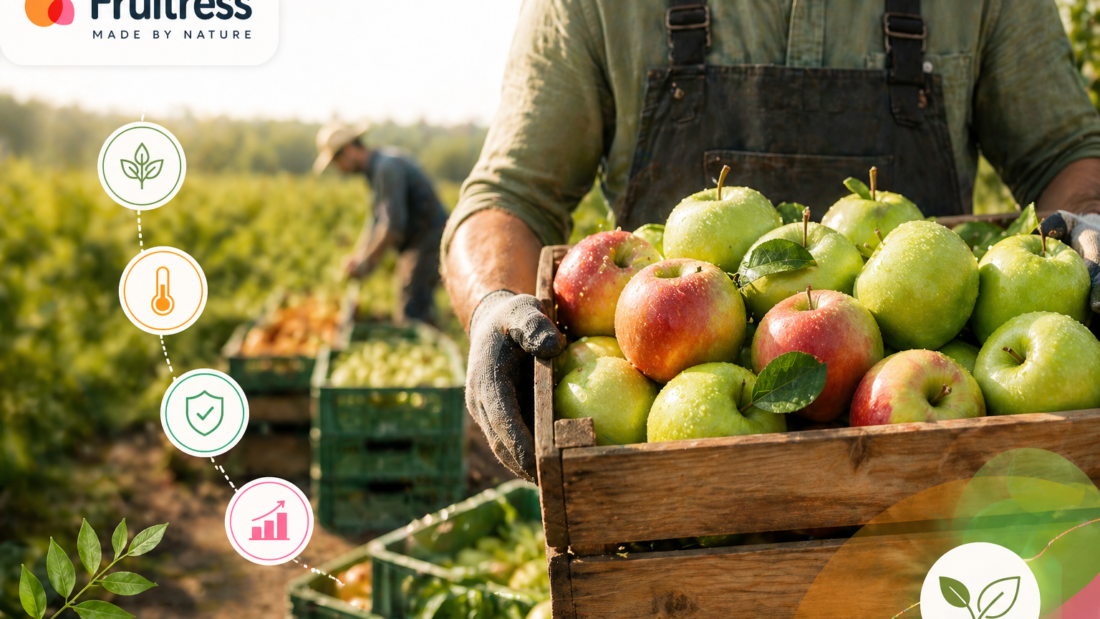
Beyond the Harvest: Transforming Losses into Profitability
For modern agricultural operations, the harvest is only half the battle. A significant portion of yield is lost between the field and the consumer—a phenomenon known as post-harvest loss. In a competitive market, these losses represent not just wasted produce, but wasted labor, water, and capital.
Reducing these losses is no longer just a “best practice”—it is the most direct path to increasing farm profitability without expanding acreage or increasing production costs.
The Physiology of Loss: Why Produce Deteriorates
To manage loss, one must understand the biology of the crop. After harvest, fruit remains a living organism, consuming oxygen and releasing carbon dioxide—a process called respiration. If not controlled, this leads to rapid senescence (aging). Key drivers of loss include:
- Transpiration: The loss of internal moisture, which causes shriveling and significant weight reduction.
- Ethylene Exposure: A natural plant hormone that accelerates ripening and decay, often triggered by bruising during handling.
- Microbial Proliferation: Micro-fractures and surface damage act as entry points for pathogens, causing rapid rot.
Strategic Management: 5 Steps to Protect Your Yield
1. Precision Harvesting Cycles
Timing is a critical variable. Harvesting during the coolest part of the day minimizes field heat, effectively starting the shelf-life clock on better terms. Early morning harvests often retain higher turgor pressure, leading to better structural integrity.
2. Mitigation of Micro-Bruising
Physical damage is often invisible to the naked eye but catastrophic for shelf life. Standardizing container density, reducing drop heights during transfers, and ensuring smooth transit surfaces can drastically reduce internal bruising.
3. Optimized Cold Chain Integration
Rapid cooling—often called “pre-cooling”—is essential. Even a few degrees of difference in initial storage temperature can exponentially slow metabolic rates and moisture loss. For smaller operations, simple passive cooling (ventilation and shade) is the necessary baseline.
4. Segregation Protocols
Never mix produce types in storage. Ethylene producers (like apples) can inadvertently ripen ethylene-sensitive crops (like leafy greens), creating a chain reaction of spoilage across your inventory.
5. Advanced Barrier Technologies
Traditional methods are reaching their physical limits. The integration of plant-based edible coatings is the new standard for proactive loss prevention. Technologies like those developed by Fruitress act as a “second skin” for produce.
The Fruitress Advantage: Molecular Protection
Fruitress coatings create a breathable, natural barrier that moderates respiration and moisture loss. By applying this solution—via simple spray or dip systems—farmers can:
- Extend Shelf Life: Up to 2x, providing more flexibility in shipping.
- Enhance Market Access: Deliver consistent, high-quality produce to more distant retailers.
- Decrease Waste Costs: Significantly reduce the percentage of inventory discarded at the retail level.
The Economic Impact: Profitability Through Preservation
Reducing post-harvest loss is essentially an immediate revenue increase. When you reduce loss by 10%, you are not just saving 10% of your crop—you are securing 10% more sellable volume from the exact same input costs. This increases your margin per hectare and provides a distinct competitive advantage in wholesale and export markets.
Conclusion
Post-harvest loss is not an inevitable tax on agriculture; it is a management challenge with clear, technology-driven solutions. By combining careful handling with modern, plant-based preservation, farmers can capture more value from every harvest.
Ready to increase your marketable yield?
Schedule a Technical Consultation