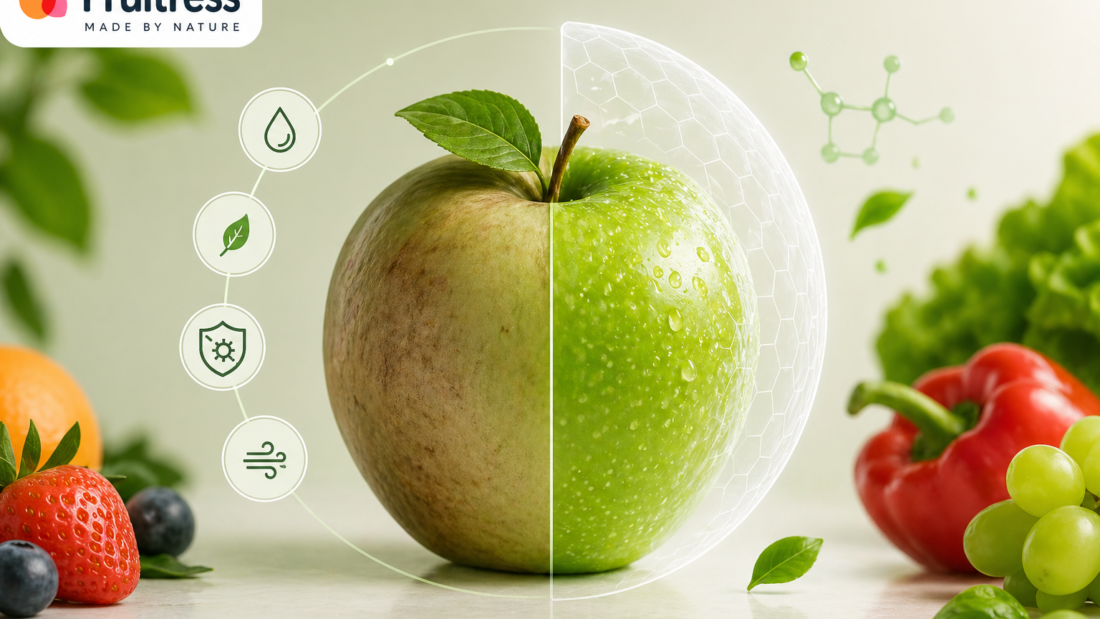
Cross-section scientific illustration showing how Fruitress edible bio-coating creates a protective barrier on fresh fruit against moisture loss and oxidation

How Edible Coatings Work: The Science Behind Longer-Lasting Fresh Produce

Fresh fruits and vegetables begin to deteriorate the moment they are harvested. Despite continuous advances in cold-chain logistics, post-harvest losses remain one of the most critical economic and environmental bottlenecks across the global food supply chain.

In recent years, edible coating technology has emerged as a groundbreaking, sustainable standard to extend shelf life, reduce food waste, and preserve produce quality—without relying on single-use plastics or synthetic chemicals.

But how exactly do edible coatings work at a physiological level? Let’s dive into the science.


What Are Edible Coatings?

Edible coatings are micro-thin, invisible layers formulated from natural, food-grade biopolymers applied directly onto the surface of whole or fresh-cut produce.

Functioning as an artificial “second skin,” these coatings enhance the fruit’s natural cuticle to:

  • Retain internal moisture and prevent dehydration
  • Moderate cellular respiration and gas exchange
  • Inhibit oxidative browning and degradation
  • Suppress microbial colonization and fungal growth

Unlike conventional petroleum-based packaging or toxic synthetic waxes, advanced edible coatings are completely biodegradable, clean-label, and safe for consumption along with the fruit.


The Mechanism: 4 Pillars of Produce Protection

Post-harvest senescence (aging) is driven by metabolic and biochemical processes. Edible coatings slow down these processes through four critical mechanisms:

1. Moisture Retention & Transpiration Control

Water evaporation is the leading cause of post-harvest weight loss and shriveling. As produce loses moisture, it suffers from structural collapse, visual shrinkage, and reduced commercial weight.

Bio-coatings form a semi-permeable lipid-polysaccharide barrier that significantly retards water vapor transmission, ensuring fruit stays firm, crisp, and heavy until it reaches consumers.

2. Regulating Gas Exchange & Oxidation

Exposure to atmospheric oxygen triggers rapid cellular breakdown, causing:

  • Enzymatic browning (especially in apples, avocados, and pears)
  • Breakdown of vitamins (particularly Vitamin C)
  • Off-flavor development

By creating a selective barrier to O2 and CO2, edible coatings limit oxygen penetration, effectively slowing down oxidative reactions without causing internal fermentation or anaerobic decay.

3. Ethylene Regulation (Ripening Control)

Ethylene is the endogenous plant hormone that triggers ripening, softening, and eventually rot. By controlling respiration rates and internal gas concentrations, bio-coatings slow down the autocatalytic production of ethylene, keeping produce in a stable, pre-climacteric state for extended durations.

4. Microbial Defense & Structural Integrity

Surface micro-fractures serve as entry gates for opportunistic mold spores (like Botrytis and Penicillium). Advanced formulations integrate natural antimicrobial agents that create an inhospitable surface environment for bacteria and fungi, preventing decay before it spreads.

Key Takeaway for Commercial Operations

Preserving physical attributes is directly tied to profit margins. A 2x increase in shelf life gives exporters flexible shipping windows and slashes retail shrinkage rates by up to 40%.


Formulation: What Are Modern Coatings Made Of?

Commercial bio-coatings are engineered from natural, food-derived building blocks tailored to specific produce varieties:

  • Polysaccharides (Cellulose, Starch, Chitosan): Provide excellent gas barrier properties and mechanical stability.
  • Lipids & Waxes (Plant Oils, Carnauba): Deliver supreme moisture barriers to arrest dehydration.
  • Plant Proteins: Form cohesive, flexibleExposure to atmospheric oxygen triggers rapid cellular breakdown, causing:
    • Enzymatic browning (especially in apples, avocados, and pears)
    • Breakdown of vitamins (particularly Vitamin C)
    • Off-flavor development

    By creating a selective barrier to O2 and CO2, edible coatings limit oxygen penetration, effectively slowing down oxidative reactions without causing internal fermentation or anaerobic decay.

    3. Ethylene Regulation (Ripening Control)

    Ethylene is the endogenous plant hormone that triggers ripening, softening, and eventually rot. By controlling respiration rates and internal gas concentrations, bio-coatings slow down the autocatalytic production of ethylene, keeping produce in a stable, pre-climacteric state for extended durations.

    4. Microbial Defense & Structural Integrity

    Surface micro-fractures serve as entry gates for opportunistic mold spores (like Botrytis and Penicillium). Advanced formulations integrate natural antimicrobial agents that create an inhospitable surface environment for bacteria and fungi, preventing decay before it spreads.

    Key Takeaway for Commercial Operations

    Preserving physical attributes is directly tied to profit margins. A 2x increase in shelf life gives exporters flexible shipping windows and slashes retail shrinkage rates by up to 40%.


    Formulation: What Are Modern Coatings Made Of?

    Commercial bio-coatings are engineered from natural, food-derived building blocks tailored to specific produce varieties:

    • Polysaccharides (Cellulose, Starch, Chitosan): Provide excellent gas barrier properties and mechanical stability.
    • Lipids & Waxes (Plant Oils, Carnauba): Deliver supreme moisture barriers to arrest dehydration.
    • Plant Proteins: Form cohesive, flexible #cbd5e1; color: #dc2626;”>High Waste / Non-RenewableModerateConsumer SafetyClean-Label & Food-GradeHigh (External)Chemical Residue ConcernsCarbon ImpactModerateConsumer SafetyClean-Label & Food-GradeHigh (External)Chemical Residue ConcernsCarbon ImpactMinimalExtremely HighMediumSupply Chain Scalability
      Ready to integrate bio-coatings into your packhouse workflow?Get in Touch with Our Agritech Team
    • Discover how Fruitress custom formulations can double your produce shelf life and minimize post-harvest loss.
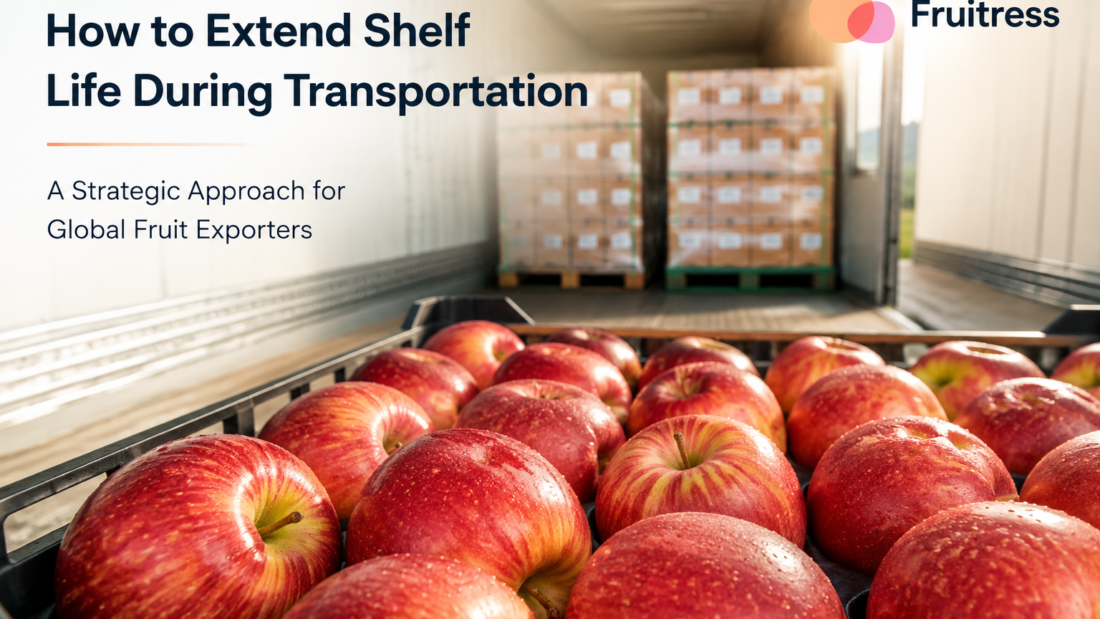
Fresh apples treated with Fruitress edible coating inside a refrigerated transport container for shelf life extension

Global Food Waste Crisis: How Advanced Edible Coatings by Fruitress Transform Agri-Supply Chains

The staggering statistics on annual agricultural product losses worldwide are no longer just an abstract metric; they represent an urgent operational crisis and an untapped economic opportunity. As post-harvest supply chains face stricter environmental regulations and higher transit costs, advanced edible coatings—pioneered by Fruitress—are emerging as an indispensable, bio-based technology designed to drastically mitigate losses, protect export margins, and align global agriculture with international sustainability benchmarks.

1. The Global Food Waste Crisis: Scale, Economic Impact, and Root Causes

According to the United Nations Food and Agriculture Organization (FAO) and international cold chain research institutes, nearly one-third of all food produced globally for human consumption is lost or wasted across the supply chain. Perishable fruits and vegetables suffer the highest loss rates of any food commodity, frequently registering loss rates between 35% and 45% between the packinghouse floor, marine or intermodal transit corridors, and retail distribution hubs.

For commercial fruit growers, logistics providers, and international export syndicates, these losses represent severe compounding costs:

The Multidimensional Cost of Post-Harvest Waste

  • Direct Financial Erosion: Significant invested capital in harvesting labor, automated sorting, fungicide treatments, refrigerated shipping containers, and customs tariffs is entirely lost when produce decays prior to consumer purchase.
  • Squandered Natural & Upstream Resources: Millions of cubic meters of agricultural irrigation water, synthetic fertilizers, arable land usage, and electrical grid energy are effectively thrown away alongside spoiled produce.
  • Embedded Scope-3 Carbon Emissions: Decomposing organic produce within landfills and municipal waste systems releases potent methane (CH₄) and CO₂ emissions, severely impacting the environmental sustainability ratings of food distributors.

The traditional approach of merely increasing agricultural output is no longer viable. The most economically sound and environmentally urgent intervention point lies in post-harvest preservation efficiency—ensuring that what is harvested successfully reaches international retail shelves in peak commercial condition.

2. The Post-Harvest Physiology: Why Fresh Fruit Degrades Rapidly

Freshly harvested fruit remains a metabolically active, living biological organism. Once severed from the parent tree or vine, the fruit’s internal reserve of nutrients and moisture becomes finite. Spoilage is accelerated by four primary physiological mechanisms:

  1. Accelerated Cellular Respiration: Fruit consumes its internal glucose, starches, and organic acids to produce energy, depleting sweetness and nutritional value while emitting heat, carbon dioxide, and water vapor.
  2. Transpirational Moisture Evaporation: Water vapor continuously escapes through natural microscopic pores (stomata and lenticels) and micro-cracks in the fruit’s natural wax cuticle, leading to cellular turgor loss, visible skin shriveling, and significant weight loss.
  3. Ethylene Gas Autocatalysis: Climacteric fruits (such as apples, pears, and bananas) synthesize ethylene (C₂H₄), an endogenous plant hormone that triggers systemic tissue softening, chlorophyll breakdown, and rapid over-ripening.
  4. Opportunistic Microbial Colonization: Fungal pathogens (such as Botrytis cinerea and Penicillium species) exploit surface micro-fissures, resulting in rot that spreads across adjacent produce in bulk packaging crates.

3. The Fruitress Bio-Coating Technology: Mechanism of Action

Fruitress engineers proprietary, plant-derived, edible bio-coatings that establish a micro-thin, semi-permeable protective matrix over the entire surface of fresh fruit. Unlike conventional non-biodegradable synthetic waxes or petroleum-based paraffin films, Fruitress formulations are completely invisible, odorless, tasteless, and 100% biodegradable.

By acting as an intelligent gas-permeable membrane, Fruitress bio-coatings modify the immediate internal micro-atmosphere of each individual fruit:

Degradation Driver Conventional Supply Chain Impact Fruitress Protective Mechanism
Moisture Transpiration 3%–8% weight loss, dull surface appearance, skin wrinkling, and loss of crisp texture. Forms an ultra-thin hydrophobic barrier that locks in cellular hydration and maintains crispness and weight.
Respiration & Gas Exchange Rapid depletion of sugars and organic acids, accelerating senescence during transit. Selectively regulates O₂ uptake and CO₂ release, placing fruit into a state of natural metabolic dormancy.
Microbial Pathogens Fungal rot, mold growth, cross-contamination spreading rapidly through shipping crates. Forms an active physical defensive barrier against external opportunistic fungal spores.
Ethylene Sensitivity Rapid softening, tissue breakdown, and synchronized over-ripening in transit containers. Minimizes tissue responsiveness to internal and environmental ethylene triggers.

4. Strategic Commercial & ESG Advantages for Exporters

In today’s competitive international agricultural marketplace, sustainability is no longer merely a public relations talking point; it is a prerequisite for commercial viability. Leading global supermarket chains and international import consortiums are aggressively enforcing rigorous ESG (Environmental, Social, and Governance) compliance standards.

By integrating Fruitress bio-coatings into standard post-harvest packing lines, commercial growers and logistics operators unlock critical commercial advantages:

  • Up to 50% Reduction in Retail Shrink: Supermarkets and regional distributors experience significantly lower product write-offs and longer shelf display life, enabling premium shelf placement and higher repurchase rates.
  • Drastic Reduction in Single-Use Plastic Wraps: By providing reliable barrier protection directly on the skin of the fruit, Fruitress eliminates the necessity for non-recyclable individual plastic wrapping and non-biodegradable synthetic liners.
  • Extended Transit Corridors & Maritime Flexibility: Exporters can comfortably access distant, high-value international export markets via cost-effective ocean freight instead of expensive air freight, without risking premature product deterioration.
  • Enhanced Resilience to Cold Chain Temperature Fluctuations: While cold chain maintenance remains essential, Fruitress-treated produce exhibits greater tolerance to minor ambient temperature spikes during intermodal transfers and customs inspections.
  • Full Compliance with Global Chemical-Residue Restrictions: Fruitress bio-coatings leave zero toxic synthetic chemical residues, ensuring seamless entry through stringent import checkpoints in the European Union, the Middle East, and North America.

5. Seamless Packinghouse Integration and Scalability

A major hurdle in adopting post-harvest technologies is operational disruption. Fruitress formulations are specifically developed for seamless compatibility with standard commercial packinghouse equipment. Whether applied through automated micro-misting systems, controlled aqueous dipping tanks, or precision spray bars during grading and sorting, Fruitress integrates effortlessly with zero capital-intensive overhaul required.

This allows packinghouse facilities to maintain existing processing line speeds while immediately upgrading product protection, traceability, and market value.

Ready to Eliminate Post-Harvest Losses in Your Supply Chain?

Partner with Fruitress to deploy next-generation post-harvest bio-coating technology tailored to your specific fruit varieties and logistics corridors.


Schedule a Technical Consultation

Screenshot 2026-06-03 162332

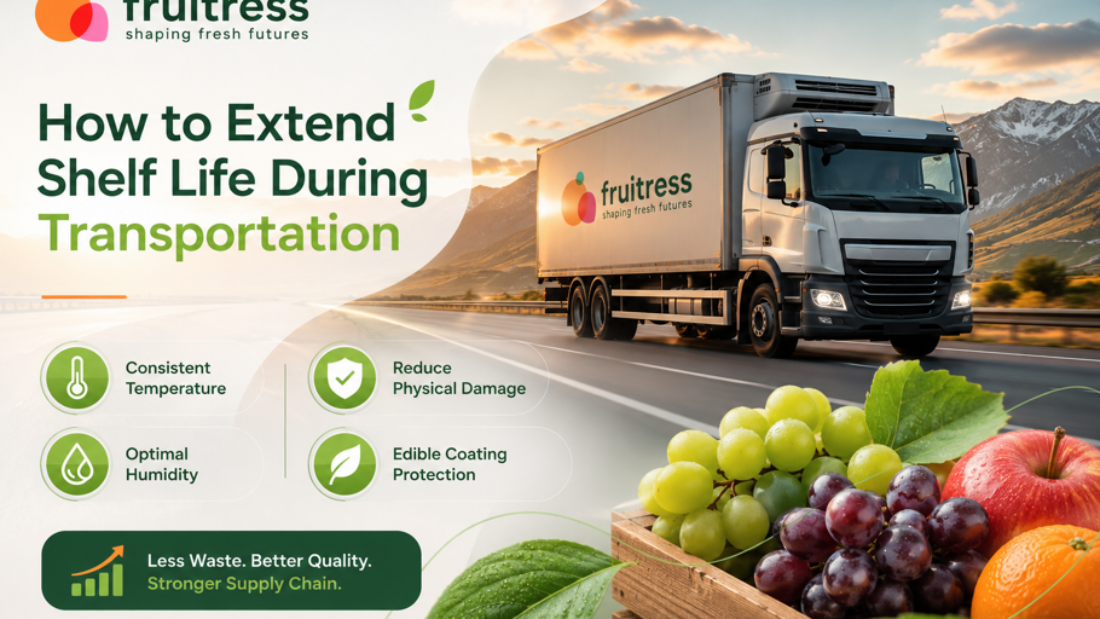
How to Extend Produce Shelf Life During Long-Haul Transportation

Fresh produce often travels hundreds—or even thousands—of kilometers across regional and international distribution corridors before reaching store shelves. During this critical transit window, fruits and vegetables face intense stressors: microclimate fluctuations, moisture evaporation, ethylene accumulation, mechanical friction, and continuous cellular respiration.

In long-haul supply chains, post-harvest losses during transit routinely reach 30% to 50%, eroding profit margins for growers, exporters, and retailers alike. Fortunately, modern post-harvest science offers proven, scalable strategies to stabilize fresh commodities in transit and preserve peak field quality upon arrival.


The Core Drivers of In-Transit Spoilage

Understanding why produce degrades during logistics is the first step toward effective mitigation. In a closed transit environment (reefer containers, trucks, and cargo holds), degradation is driven by five interrelated mechanisms:

  • Moisture Loss & Weight Shrinkage: Transpiration continues after harvest. Even a 3%–5% loss in natural water content leads to visible shriveling, loss of firmness, and direct financial loss due to reduced saleable weight.
  • Microclimate Temperature Fluctuations: Breaks in the cold chain accelerate enzymatic breakdown and trigger surface condensation, creating ideal conditions for fungal pathogens like Botrytis cinerea.
  • Ethylene Gas Buildup: Climacteric fruits naturally release ethylene gas inside enclosed cargo areas, triggering premature ripening across neighboring sensitive produce.
  • Mechanical Vibration & Handling Stress: Unpaved routes and loading/unloading cause micro-abrasions that compromise outer epidermal layers.
  • Oxidative Degradation: Exposure to ambient oxygen speeds up cellular decay, nutrient loss, and browning.

5 Practical Strategies to Protect Produce Integrity in Transit

1. Maintain Strict Cold Chain Integrity

Temperature management remains fundamental. Lowering pulp temperature to commodity-specific baselines slows respiration rates dramatically.

  • Pre-cool produce (e.g., forced-air cooling or hydrocooling) before loading.
  • Calibrate and inspect refrigeration units regularly to prevent temperature stratification inside cargo trailers.

2. Control In-Transit Humidity

Dry airflow inside refrigerated units can accelerate dehydration. Maintaining relative humidity (RH) between 85% and 95% (depending on the crop) prevents transpirational moisture loss while avoiding standing free water on produce surfaces.

3. Optimize Packaging and Pallet Configurations

  • Use rigid, well-ventilated corrugated crates that withstand stack pressure.
  • Ensure airflow channels across pallets are unobstructed to avoid hot spots within the container core.
  • Secure pallets with breathable strapping to limit road vibration friction.

4. Separate Ethylene Producers from Sensitive Commodities

Segregate heavy ethylene generators (such as apples, avocados, and bananas) from ethylene-sensitive products (such as leafy greens, berries, cucumbers, and carrots). In multi-commodity loads, active ethylene scrubbing systems or bio-compatible barriers are essential.

5. Deploy Plant-Based Protective Coatings

While cold storage and humidity controls manage external air, plant-based edible coatings act as an invisible, microscopic barrier directly on the surface of the fruit.

By applying an all-natural, food-grade protective matrix prior to packing:

  • Water loss is reduced by up to 40%, preserving initial harvest weight and crispness.
  • Internal respiration is stabilized, moderating oxygen uptake and delaying over-ripening.
  • Transit window is extended by days or weeks, unlocking broader export destinations without relying on single-use plastic wraps or synthetic chemical waxes.

The Bottom-Line Impact for Distributors and Exporters

Extending transit shelf life is not merely a quality assurance measure; it directly drives commercial performance:

Operational Metric Standard Transit With Advanced Preservation Technology
In-Transit Spoilage High (15%–30%) Reduced by 35%–70%
Moisture / Weight Loss Severe shrinkage Minimal (Retained marketable weight)
Distribution Radius Limited to regional lanes Expanded to long-haul & global export
Retail Shelf Life on Arrival 2–4 days 7–14+ days

Conclusion: Turning Logistics into a Value Driver

Transportation is often where fresh produce value is most vulnerable. By pairing disciplined temperature control and proper airflow with modern plant-based shelf-life extension solutions, growers and distributors can turn long logistics corridors into reliable pathways for premium produce.

In an increasingly demanding global food market, preserving natural freshness throughout transit is the smartest way to cut waste, protect margins, and deliver uncompromised quality.