Food waste remains one of the most urgent and overlooked challenges in the global food system. In 2025, despite significant strides in agricultural efficiency and digital logistics, a massive portion of the world’s food production never reaches the consumer’s plate.
Understanding the scale, the underlying causes, and the emerging technological trends is essential—not only for policymakers but for every stakeholder in the supply chain, from farmers to food-tech innovators.
The Scale: How Much Food Is Wasted Globally?
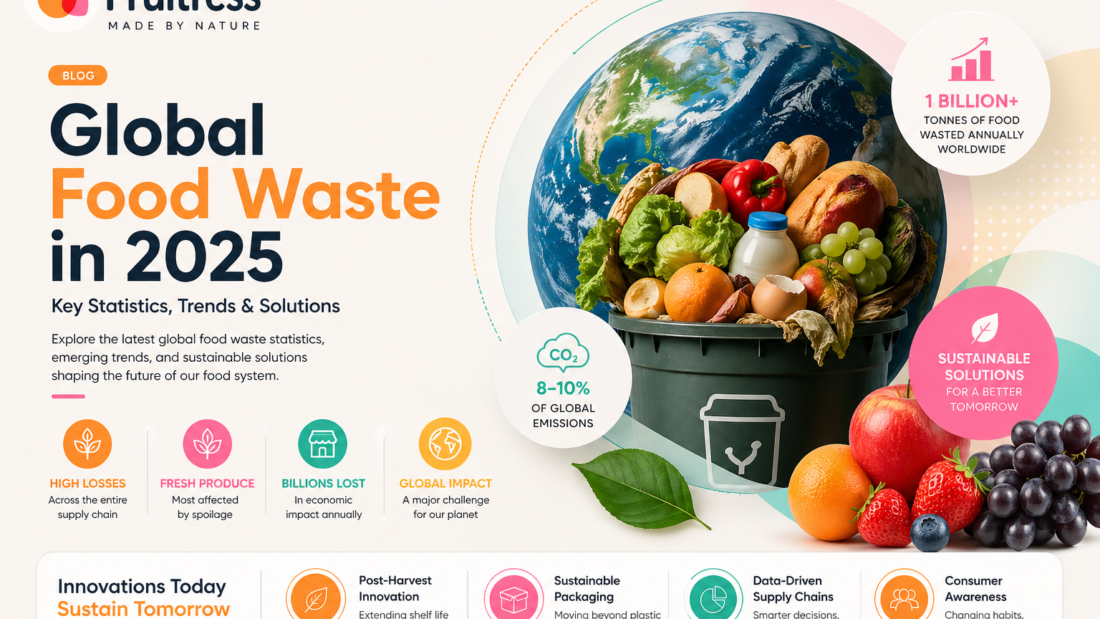
Recent data indicates that more than 1 billion tonnes of food are wasted annually worldwide. This represents nearly 20% of all food available to consumers—a staggering figure that translates into massive economic and environmental losses.
This waste is systemic and occurs at every touchpoint:
- On-Farm: Harvesting inefficiencies and grading standards.
- Logistics: Spoilage during transit due to temperature fluctuations.
- Retail: Overstocking and rigid aesthetic standards.
- Consumer: Purchasing habits and improper storage.
Regional Disparities: A Tale of Two Systems
While food waste is a global pandemic, its drivers differ drastically by geography:
Developed Markets (North America, Europe)
Waste is concentrated at the retail and consumer levels. It is often driven by “cosmetic perfection” (discarding produce that doesn’t meet visual standards) and high-volume over-purchasing.
Emerging Markets (Asia, Latin America, Africa)
The primary challenge is post-harvest loss. Due to limited cold-chain infrastructure and inefficient transport, produce often spoils before it can even leave the production region.
The Hidden Cost: Environmental Impact
Food waste is not just a logistical failure; it is a major climate driver. When food is discarded, the resources used to grow it—water, land, labor, and fuel—are squandered.
Furthermore, organic waste in landfills generates methane, a potent greenhouse gas. Globally, food waste contributes approximately 8–10% of total greenhouse gas emissions, making it a critical focus area for climate change mitigation in 2025.
Why Fresh Produce Is the Most Vulnerable
Fresh fruits and vegetables are highly perishable. They continue to “live” and breathe (respiration) after harvest. Key spoilage factors include:
- Moisture Loss: Leading to shriveling and weight reduction.
- Oxidation: Causing browning and nutrient loss.
- Ethylene Sensitivity: Accelerating the ripening cycle.
2025 Trends: Shifting the Paradigm
As the industry pivots toward sustainability, four trends are leading the reduction movement:
- Advanced Post-Harvest Tech: Moving beyond basic cold storage.
- Sustainable Packaging: A rapid shift from plastic toward bio-based, edible alternatives.
- Data-Driven Supply Chains: Using AI for predictive inventory management.
- Conscious Consumerism: Growing market demand for sustainability-backed products.
The Breakthrough: Edible Coatings
One of the most promising solutions in 2025 is the integration of plant-based edible coatings. By creating an invisible, breathable barrier, these coatings regulate moisture, oxygen, and ethylene—effectively “pausing” the aging process of produce.
Is Your Supply Chain Optimized for 2025?
Innovations like Fruitress are enabling producers and distributors to deliver fresher, longer-lasting products while significantly reducing the carbon footprint of their operations.
Conclusion
Food waste in 2025 is a critical challenge, but it is also an unparalleled opportunity for innovation. By combining smarter logistics, data-driven decisions, and sustainable technology, the food industry can move toward a future where less is wasted and more is preserved.