
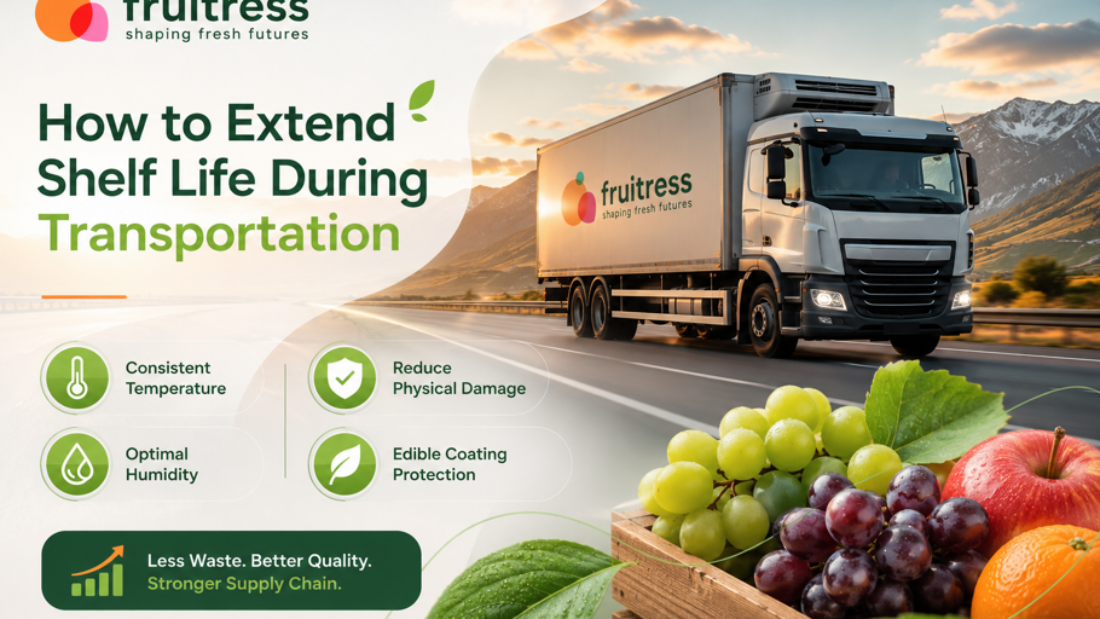
Fresh produce often travels hundreds—or even thousands—of kilometers across regional and international distribution corridors before reaching store shelves. During this critical transit window, fruits and vegetables face intense stressors: microclimate fluctuations, moisture evaporation, ethylene accumulation, mechanical friction, and continuous cellular respiration.
In long-haul supply chains, post-harvest losses during transit routinely reach 30% to 50%, eroding profit margins for growers, exporters, and retailers alike. Fortunately, modern post-harvest science offers proven, scalable strategies to stabilize fresh commodities in transit and preserve peak field quality upon arrival.
The Core Drivers of In-Transit Spoilage
Understanding why produce degrades during logistics is the first step toward effective mitigation. In a closed transit environment (reefer containers, trucks, and cargo holds), degradation is driven by five interrelated mechanisms:
- Moisture Loss & Weight Shrinkage: Transpiration continues after harvest. Even a 3%–5% loss in natural water content leads to visible shriveling, loss of firmness, and direct financial loss due to reduced saleable weight.
- Microclimate Temperature Fluctuations: Breaks in the cold chain accelerate enzymatic breakdown and trigger surface condensation, creating ideal conditions for fungal pathogens like Botrytis cinerea.
- Ethylene Gas Buildup: Climacteric fruits naturally release ethylene gas inside enclosed cargo areas, triggering premature ripening across neighboring sensitive produce.
- Mechanical Vibration & Handling Stress: Unpaved routes and loading/unloading cause micro-abrasions that compromise outer epidermal layers.
- Oxidative Degradation: Exposure to ambient oxygen speeds up cellular decay, nutrient loss, and browning.
5 Practical Strategies to Protect Produce Integrity in Transit
1. Maintain Strict Cold Chain Integrity
Temperature management remains fundamental. Lowering pulp temperature to commodity-specific baselines slows respiration rates dramatically.
- Pre-cool produce (e.g., forced-air cooling or hydrocooling) before loading.
- Calibrate and inspect refrigeration units regularly to prevent temperature stratification inside cargo trailers.
2. Control In-Transit Humidity
Dry airflow inside refrigerated units can accelerate dehydration. Maintaining relative humidity (RH) between 85% and 95% (depending on the crop) prevents transpirational moisture loss while avoiding standing free water on produce surfaces.
3. Optimize Packaging and Pallet Configurations
- Use rigid, well-ventilated corrugated crates that withstand stack pressure.
- Ensure airflow channels across pallets are unobstructed to avoid hot spots within the container core.
- Secure pallets with breathable strapping to limit road vibration friction.
4. Separate Ethylene Producers from Sensitive Commodities
Segregate heavy ethylene generators (such as apples, avocados, and bananas) from ethylene-sensitive products (such as leafy greens, berries, cucumbers, and carrots). In multi-commodity loads, active ethylene scrubbing systems or bio-compatible barriers are essential.
5. Deploy Plant-Based Protective Coatings
While cold storage and humidity controls manage external air, plant-based edible coatings act as an invisible, microscopic barrier directly on the surface of the fruit.
By applying an all-natural, food-grade protective matrix prior to packing:
- Water loss is reduced by up to 40%, preserving initial harvest weight and crispness.
- Internal respiration is stabilized, moderating oxygen uptake and delaying over-ripening.
- Transit window is extended by days or weeks, unlocking broader export destinations without relying on single-use plastic wraps or synthetic chemical waxes.
The Bottom-Line Impact for Distributors and Exporters
Extending transit shelf life is not merely a quality assurance measure; it directly drives commercial performance:
| Operational Metric | Standard Transit | With Advanced Preservation Technology |
|---|---|---|
| In-Transit Spoilage | High (15%–30%) | Reduced by 35%–70% |
| Moisture / Weight Loss | Severe shrinkage | Minimal (Retained marketable weight) |
| Distribution Radius | Limited to regional lanes | Expanded to long-haul & global export |
| Retail Shelf Life on Arrival | 2–4 days | 7–14+ days |
Conclusion: Turning Logistics into a Value Driver
Transportation is often where fresh produce value is most vulnerable. By pairing disciplined temperature control and proper airflow with modern plant-based shelf-life extension solutions, growers and distributors can turn long logistics corridors into reliable pathways for premium produce.
In an increasingly demanding global food market, preserving natural freshness throughout transit is the smartest way to cut waste, protect margins, and deliver uncompromised quality.