

Introduction
Food waste remains one of the most urgent and overlooked challenges in the global food system. In 2025, despite advances in agriculture and logistics, a significant portion of the world’s food production never reaches consumers.
Understanding the scale, causes, and emerging trends of food waste is essential—not only for policymakers but also for farmers, distributors, and food technology innovators seeking sustainable solutions.
How Much Food Is Wasted Globally?
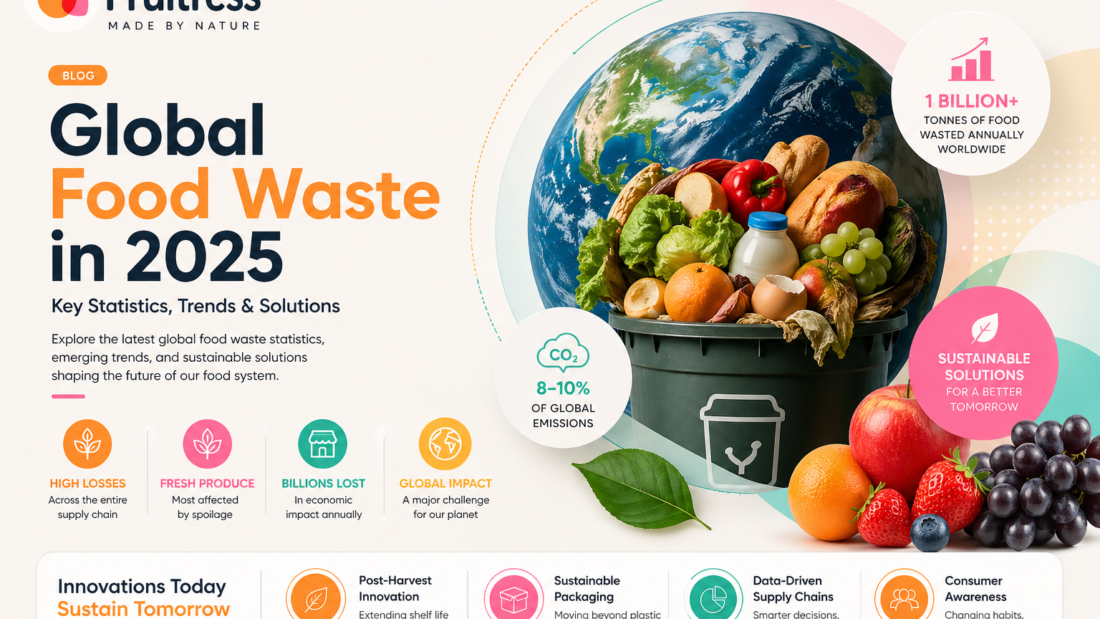
Recent data shows that more than 1 billion tonnes of food are wasted annually worldwide, representing nearly 20% of all food available to consumers.
This waste occurs across the entire supply chain:
- On farms due to harvesting inefficiencies
- During transportation because of spoilage
- At retail level due to overstocking and cosmetic standards
- At the consumer level due to purchasing and consumption habits
Fruits and vegetables are among the most vulnerable categories, with high spoilage rates due to their perishable nature.
Food Waste by Region
Food waste is a global issue, but its causes vary by region:
Developed Markets (North America, Europe)
- High waste at retail and consumer levels
- Strict cosmetic standards for produce
- Over-purchasing and low price sensitivity
Emerging Markets (Asia, Latin America, Africa)
- Post-harvest losses dominate
- Lack of cold storage infrastructure
- Inefficient transportation and supply chains
In countries like Canada, food waste continues to represent billions of dollars in economic loss annually, highlighting both an environmental and financial challenge.
The Environmental Impact of Food Waste
Food waste is not just a supply chain inefficiency—it is a major environmental issue.
When food is wasted:
- Water used for irrigation is lost
- Energy used for production and transport is wasted
- Organic waste generates methane in landfills
Globally, food waste is responsible for approximately 8–10% of greenhouse gas emissions, making it one of the largest contributors to climate change.
Why Fresh Produce Is the Most Affected
Fresh fruits and vegetables are highly perishable and sensitive to environmental conditions.
Key causes of spoilage include:
- Moisture loss leading to shriveling
- Oxidation causing discoloration
- Microbial growth leading to decay
- Ethylene gas accelerating ripening
Without proper preservation methods, produce can lose market value within days after harvest.
Emerging Trends in Food Waste Reduction (2025)
As awareness grows, several trends are shaping the future of food waste reduction:
1. Post-Harvest Innovation
New technologies are focusing on extending shelf life directly after harvest, where losses are highest.
2. Sustainable Packaging Alternatives
There is a global shift away from plastic packaging toward biodegradable and edible solutions.
3. Data-Driven Supply Chains
AI and predictive analytics are helping optimize inventory and reduce overstocking.
4. Consumer Awareness
More consumers are prioritizing sustainability, influencing retailers and suppliers to adopt waste-reduction practices.
The Role of Edible Coatings in Reducing Waste
One of the most promising solutions in 2025 is the use of plant-based edible coatings.
These coatings act as a natural barrier that:
- Reduces moisture loss
- Slows oxidation
- Delays ripening
- Protects against microbial growth
By extending shelf life, edible coatings can significantly reduce post-harvest losses without relying on plastic packaging or chemical preservatives.
A Call to Action: Rethinking Food Preservation
Reducing food waste requires action at every stage of the supply chain—from farms to consumers.
For producers and distributors, the opportunity is clear:
- Invest in better post-harvest solutions
- Adopt sustainable preservation technologies
- Optimize logistics and storage practices
Innovations like those developed by Fruitress are helping reshape how fresh produce is preserved, making it possible to deliver fresher products while reducing environmental impact.
Conclusion
Food waste in 2025 remains a critical global challenge—but also a major opportunity for innovation.
By combining technology, sustainability, and smarter supply chains, the food industry can move toward a future where less is wasted and more is preserved.
The question is no longer if we can reduce food waste—but how fast we can scale the solutions.
Add a Comment