

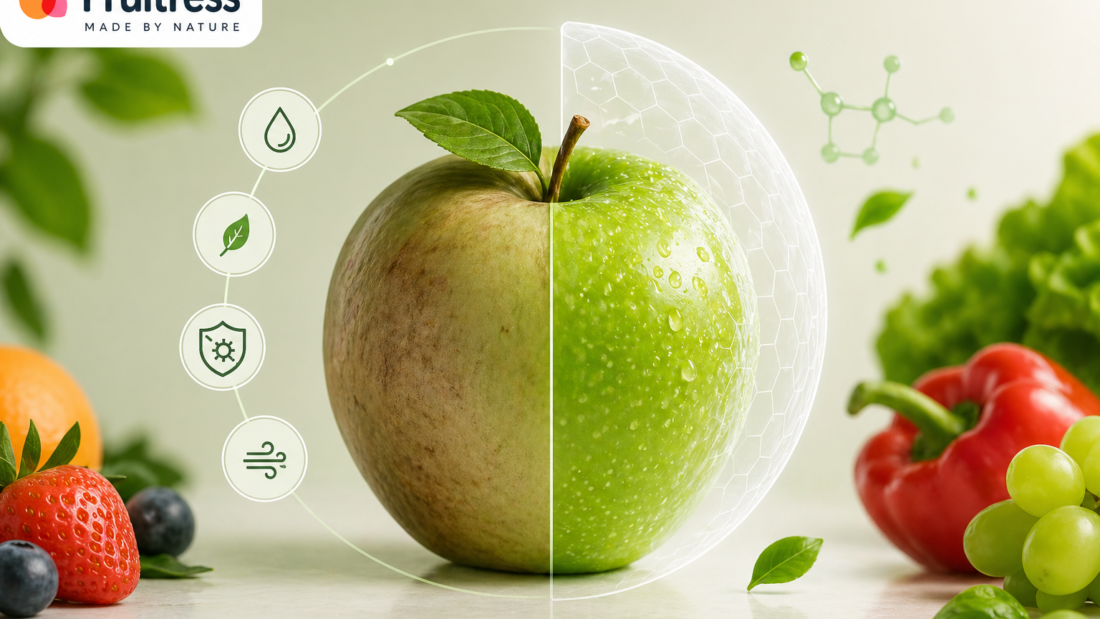
How Edible Coatings Work: The Science Behind Longer-Lasting Fresh Produce
Introduction
Fresh fruits and vegetables begin to deteriorate the moment they are harvested. Despite advances in cold storage and logistics, post-harvest losses remain a major challenge across the global food supply chain.
In recent years, edible coating technology has emerged as a powerful, sustainable solution to extend shelf life, reduce food waste, and maintain produce quality—without relying on plastic packaging or synthetic chemicals.
But how exactly do edible coatings work?
What Are Edible Coatings?
Edible coatings are thin, invisible layers made from natural, food-grade materials that are applied to the surface of fruits and vegetables.
They act as a protective barrier, mimicking the natural skin of produce while enhancing its ability to:
- Retain moisture
- Slow down oxidation
- Reduce microbial growth
- Control gas exchange
Unlike traditional packaging, edible coatings are consumed along with the product, making them a clean-label and environmentally friendly solution.
The Science Behind Edible Coatings
The effectiveness of edible coatings lies in their ability to regulate the key factors that cause spoilage.
1. Moisture Control
One of the main causes of produce deterioration is water loss.
As fruits lose moisture:
- They shrink
- Their texture degrades
- Their market value decreases
Edible coatings form a semi-permeable layer that reduces water evaporation, helping fruits remain fresh and firm for longer.
2. Oxygen and Oxidation Management
Oxygen exposure leads to oxidation, which causes:
- Browning (e.g., apples, bananas)
- Flavor degradation
- Nutrient loss
Edible coatings limit oxygen penetration, slowing down oxidative reactions and preserving the visual and nutritional quality of produce.
3. Ethylene Regulation (Ripening Control)
Ethylene is a natural plant hormone responsible for ripening.
However, excess ethylene accelerates:
- Softening
- Color change
- Spoilage
Edible coatings help regulate ethylene exchange, effectively delaying ripening and extending shelf life.
4. Microbial Protection
Microorganisms such as bacteria and fungi are a major cause of food spoilage.
Some edible coatings incorporate natural antimicrobial properties, creating an additional barrier against:
- Mold growth
- Surface contamination
- Rot development
Materials Used in Edible Coatings
Edible coatings are typically made from natural biopolymers, including:
- Polysaccharides (e.g., cellulose, starch)
- Proteins (e.g., plant proteins)
- Lipids (natural waxes and oils)
Each material contributes different functional properties, allowing coatings to be customized for specific types of produce.
Application Methods
Edible coatings are designed to integrate seamlessly into existing agricultural workflows.
They can be applied using:
- Spraying
- Dipping
- Rinsing systems
No complex machinery is required, making the technology scalable from small farms to large distribution centers.
Benefits of Edible Coatings
The adoption of edible coatings offers significant advantages across the supply chain:
For Farmers
- Reduced post-harvest losses
- Increased sellable yield
- Extended market access
For Distributors & Retailers
- Longer shelf life during transport
- Lower shrinkage rates
- Improved product quality
For the Environment
- Reduced food waste
- Lower carbon footprint
- Elimination of plastic packaging
Edible Coatings vs Traditional Preservation Methods
| Factor | Edible Coatings | Plastic Packaging | Chemical Preservatives |
|---|---|---|---|
| Sustainability | High | Low | Medium |
| Food Safety | High | High | Variable |
| Environmental Impact | Low | High | Medium |
| Consumer Acceptance | Growing | Declining | Declining |
The shift toward clean-label and sustainable solutions is accelerating the adoption of edible coatings globally.
The Future of Food Preservation
As the global food system evolves, the need for smarter, more sustainable preservation methods is becoming critical.
Edible coatings represent a key innovation at the intersection of:
- AgriTech
- Sustainability
- Food security
Companies like Fruitress are advancing this technology by developing coatings that are not only effective, but also scalable, cost-efficient, and environmentally responsible.
Conclusion
Edible coatings are more than just a protective layer—they are a transformative solution for one of the biggest challenges in the food industry.
By controlling moisture, oxygen, ethylene, and microbial activity, these coatings significantly extend the life of fresh produce.
In a world where nearly one-fifth of food is wasted, technologies like edible coatings are not optional—they are essential.
Add a Comment