

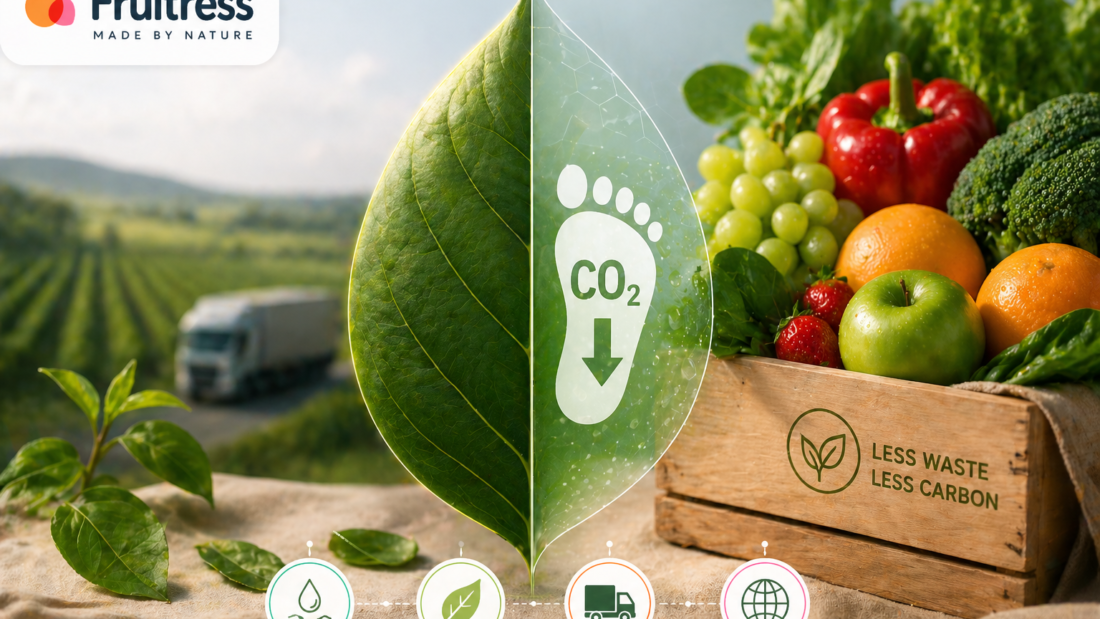
Reducing Food Waste = Reducing Carbon Footprint
Introduction
Food waste is often seen as a supply chain inefficiency—but in reality, it is a major environmental challenge.
Today, nearly one-fifth of all food produced globally is wasted, and every kilogram of wasted food carries a hidden cost: carbon emissions.
Reducing food waste is one of the fastest and most effective ways to lower the global carbon footprint.
The Link Between Food Waste and Emissions
Every stage of food production generates greenhouse gas emissions:
- Farming and irrigation
- Fertilizers and energy use
- Packaging and transportation
When food is wasted, all these resources—and their emissions—are wasted as well.
In addition, food waste that ends up in landfills produces methane, a greenhouse gas significantly more potent than CO₂.
As a result, food waste is responsible for 8–10% of global greenhouse gas emissions.
Why Fresh Produce Matters Most
Fruits and vegetables are among the most wasted food categories due to their short shelf life.
Key challenges include:
- Rapid moisture loss
- Fast ripening
- Sensitivity to temperature and handling
Without effective preservation, a large portion of fresh produce never reaches consumers—especially in long supply chains.
Reducing Waste at the Source
To lower emissions, the focus must shift to preventing waste before it happens, especially after harvest.
Key strategies include:
- Improving storage and transportation conditions
- Reducing handling damage
- Extending shelf life through better preservation
The longer produce remains fresh, the lower the risk of waste—and the lower the environmental impact.
The Role of Sustainable Technologies
Innovations in food preservation are playing a critical role in reducing both food waste and emissions.
One of the most promising solutions is plant-based edible coatings.
These coatings:
- Slow down moisture loss
- Delay ripening
- Reduce spoilage
- Extend shelf life without plastic packaging
By keeping produce fresh longer, they help reduce waste across the entire supply chain.
Beyond Food Waste: Reducing Plastic Use
Traditional preservation often relies on plastic packaging, which creates additional environmental challenges.
Edible coatings offer a dual benefit:
- Reducing food waste
- Eliminating the need for plastic wrap
This makes them a key solution for building a more sustainable, low-carbon food system.
Conclusion
Reducing food waste is not just about saving food—it is about protecting the planet.
Every step taken to extend shelf life and prevent spoilage directly contributes to lowering carbon emissions.
For farmers, distributors, and retailers, adopting smarter preservation methods is no longer optional—it is essential for a more sustainable future.
Add a Comment